
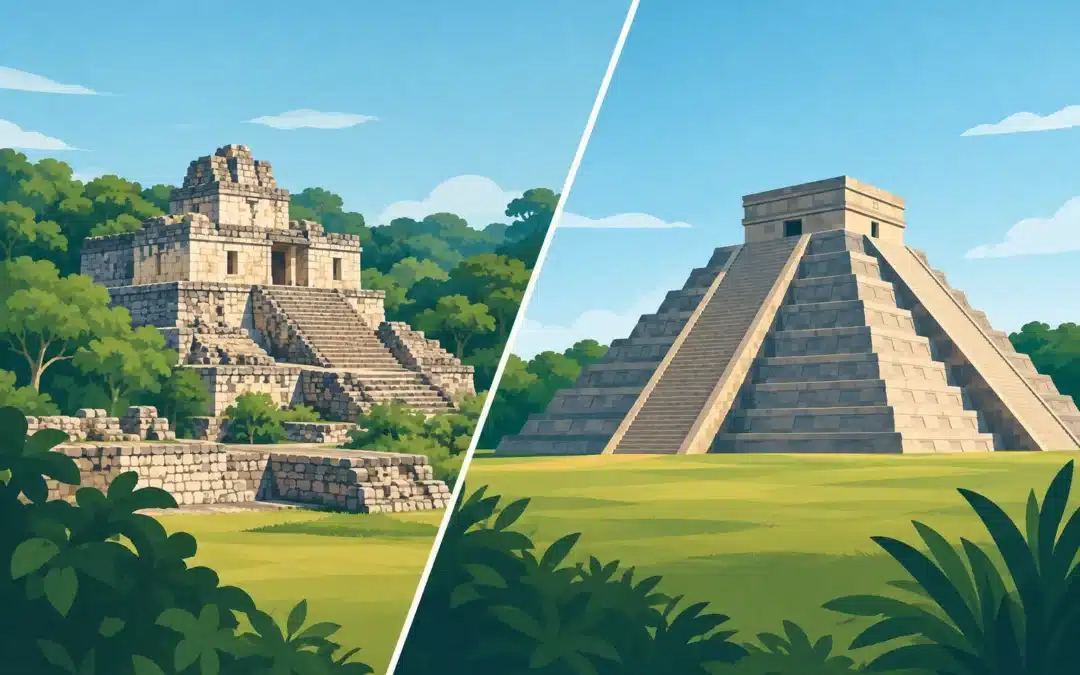
Ek Balam versus Chichen Itza is not a contest between a good ruin and a bad one. Both are extraordinary Maya cities, yet they create completely different days from Valladolid. One delivers the scale, legends, and iconic pyramid you have seen in photographs. The other feels quieter, greener, and more personal, with a jungle setting that invites you to slow down.
The best choice depends on what you want to feel when you get there. Do you want to stand before one of the most famous monuments in Mexico? Or would you rather hear birds in the trees, study carved stucco up close, and cool off in a nearby cenote after the ruins? Here is how to choose your Maya adventure.
Ek Balam versus Chichen Itza: the essential difference
Chichen Itza is the grand statement. It was a major regional capital, a place of trade, astronomy, ceremony, and political power. Its central pyramid, El Castillo, rises above broad plazas and draws travelers from across the world. Visiting it means seeing a landmark that belongs on many Mexico itineraries for a reason.
Ek Balam is more intimate. Its name is often translated as “Black Jaguar,” and its architecture sits within a forested archaeological zone north of Valladolid. The Acropolis is its dramatic centerpiece, but the details are what stay with many visitors: sculpted figures, ornate doorways, defensive walls, and views over the Yucatecan canopy.
Neither site is automatically better. Chichen Itza is for travelers who want the essential, world-famous Maya experience. Ek Balam is for those who value a more relaxed pace, close visual detail, and a day that can easily include a swim in a beautiful cenote.
Choose Chichen Itza for scale, history, and big landmarks
Chichen Itza has an energy that is hard to duplicate. El Castillo, also known as the Temple of Kukulkan, is an architectural calendar in stone. Its design reflects careful observations of time, seasons, and celestial movement. During the spring and fall equinoxes, light and shadow create the famous illusion of a serpent moving along the pyramid’s staircase.
But Chichen Itza is much more than one pyramid. Walk with a knowledgeable local guide and the site opens up. You can understand the Great Ball Court, where sound carries in surprising ways; the Temple of the Warriors, with its rows of columns; and the Sacred Cenote, a place tied to ritual offerings and the Maya relationship with water.
This is the better choice if it is your first visit to Yucatán and you would regret leaving without seeing one of the New Seven Wonders of the World. It also suits travelers who love archaeology and want the context of a large, influential ancient city.
The trade-off is popularity. Chichen Itza can be busy, especially during late morning and around the main plaza. The heat also builds quickly because much of the site is open. An early departure from Valladolid changes the experience dramatically. Arrive close to opening time, walk before the largest groups arrive, and you will have more space for photos and more attention for the stories behind the stones.
Most visitors cannot climb El Castillo. That rule protects the monument and helps preserve it for future generations. If climbing a pyramid is at the top of your wish list, ask about current access rules at other sites before you plan your day, as regulations can change.
A Chichen Itza day works best when you add water
After a morning at Chichen Itza, a cenote stop is more than a nice extra. It is the perfect reset after sun, walking, and ancient history. Swim in cool limestone-filtered water, enjoy a regional lunch, and let the pace shift. This combination works especially well for families, couples, and anyone visiting between March and October.
You can also combine Chichen Itza with Valladolid, where colonial streets, local markets, and the city’s central plaza create a strong contrast with the archaeological site. It makes a full, varied day without feeling rushed when transportation and timing are organized well.
Choose Ek Balam for a quieter, more active visit
Ek Balam feels different from the moment you enter. The paths are shaded in places, the complex is less sprawling, and the forest seems closer. There are still impressive open areas, but the atmosphere is generally calmer than at Chichen Itza.
The Acropolis is the reason many travelers fall in love with this site. Its facade includes an elaborate jaguar-mouth entrance and beautifully preserved sculptural elements. The tomb of Ukit Kan Lek Tok’, an important ruler of Ek Balam, was found within this monumental structure. With the right guide, these details stop being decorative stone and become clues to power, belief, and identity.
Ek Balam is usually easier to enjoy at an unhurried pace. Photographers can frame architecture against trees rather than crowds. Families have room to ask questions. Travelers who have already visited major archaeological sites often appreciate its quieter character and the sensation of finding something slightly off the main tourist path.
Access to climb structures has varied over time, and preservation rules can be updated without much notice. Do not plan your visit solely around climbing. Instead, go for the Acropolis, the carvings, the forest setting, and the chance to understand a city that was once a powerful center in its own right.
Ek Balam and a cenote make an easy pairing
Ek Balam is close to Cenote X’Canché, a popular option for cooling off after the ruins. The setting makes for a natural half-day or full-day adventure: walk through Maya history, descend into clear water, then enjoy a relaxed meal before returning to Valladolid.
This pairing is ideal for active travelers. You can swim, take photos, and move at a pace that feels more like a day outdoors than a museum visit. It is also a smart option if your travel schedule is short and you want a meaningful archaeological experience without spending most of the day in transit.
Travel time and logistics from Valladolid
Valladolid makes both sites easy to reach, which is one reason it is such a useful base for exploring eastern Yucatán. Ek Balam is roughly 30 minutes away by car, depending on where you start and local road conditions. Chichen Itza is usually around 45 minutes to an hour from Valladolid.
That difference matters less than your preferred rhythm. Ek Balam allows for a later start or a leisurely return to town. Chichen Itza rewards an early wake-up because arriving before the hottest and busiest hours can transform the visit.
Independent travelers can rent a car or arrange transportation, but a small-group or private tour removes the practical friction. You do not need to navigate, search for the best cenote timing, or wonder whether you are missing the story behind a building. A local guide can also help you understand which details are historical evidence, which are interpretations, and where respectful behavior matters most.
At MexiGo Tours, we love helping travelers build the right day from Valladolid rather than pushing a one-size-fits-all route. Some guests want Chichen Itza at opening time followed by a swim. Others want Ek Balam, a quiet cenote, and more time to enjoy lunch. Both are great choices when the itinerary matches your travel style.
Which site is best for your group?
Choose Chichen Itza if this is your first trip to Yucatán, if you are fascinated by major civilizations, or if seeing El Castillo is a non-negotiable part of your Mexico trip. It is also the stronger option for travelers who want a deeper look at the vast scale of Maya political and ceremonial life.
Choose Ek Balam if you prefer smaller crowds, enjoy nature around the ruins, or want to combine archaeology and cenote time without a long day. It often works beautifully for couples, families with curious kids, and travelers who want distinctive photos beyond the classic Chichen Itza view.
If you have two mornings available, visit both. Start with Chichen Itza early on one day, when the light is soft and the plazas are more comfortable. Save Ek Balam for another morning, then linger at a cenote and return to Valladolid with time to explore the city. The two sites tell different chapters of the Maya story, and seeing both makes each one more meaningful.
Pack water, wear a hat, choose shoes with good grip, and bring swimwear if a cenote is part of the plan. Then let your curiosity decide. The best Maya ruin is the one that leaves enough room in your day to look closely, ask questions, and carry the experience with you long after you leave Yucatán.


