
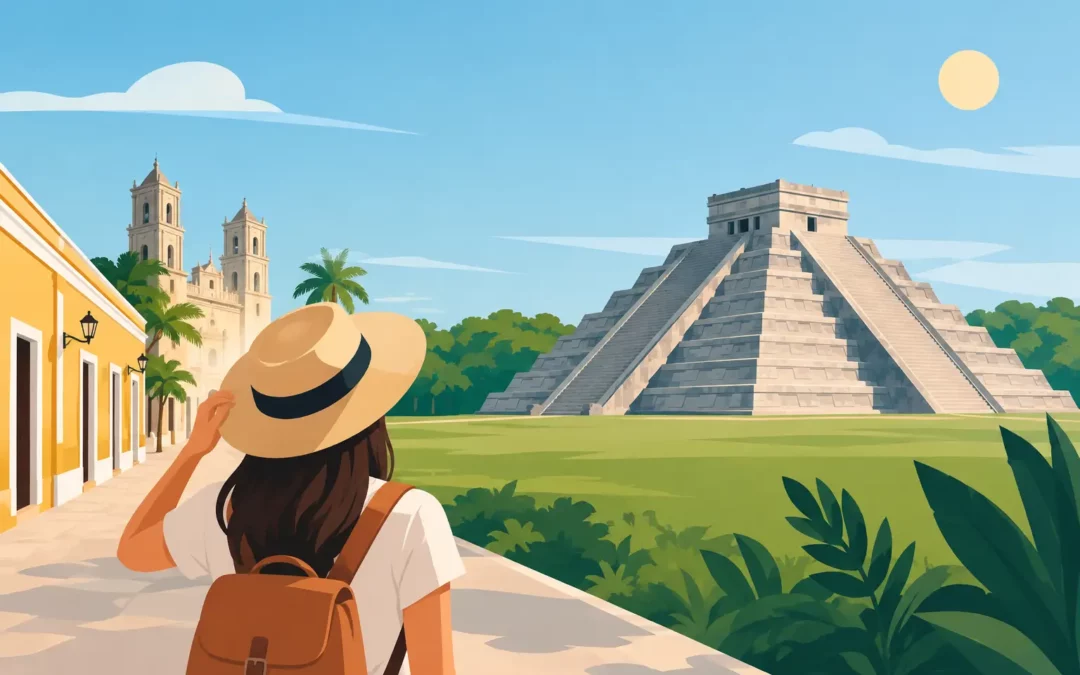
The first view of Chichen Itza can feel almost unreal: El Castillo rising above the flat Yucatan landscape, limestone bright in the morning sun, iguanas resting along the ancient walls. But a great visit is not just about arriving at the pyramid. It is about choosing the right hour, understanding what you are seeing, and leaving enough room in the day for a swim, a good meal, or a quiet village stop.
From Valladolid, Chichen Itza is close enough for a relaxed day trip, yet important enough to deserve more than a rushed photo stop. Start early, go with someone who knows the site, and let the place reveal more than its most famous silhouette.
Why Chichen Itza Still Feels So Powerful
Chichen Itza was one of the most influential cities of the ancient Maya world. It flourished for centuries and became a major political, commercial, and ceremonial center in northern Yucatan. The city brought together Maya traditions and influences from central Mexico, which is one reason its architecture feels different from many other archaeological sites in the region.
El Castillo, also known as the Temple of Kukulkan, is the monument most travelers come to see. Its design reflects careful astronomical knowledge: the pyramid has 365 steps when its four stairways and upper platform are counted together, echoing the solar year. During the spring and fall equinoxes, light and shadow create the appearance of a serpent moving down its staircase. That event is famous, but the pyramid is impressive on any day of the year.
Look beyond El Castillo, though. The Great Ball Court is enormous, with stone rings set high along its walls. The Temple of the Warriors, the Group of a Thousand Columns, the sacred cenote, and the detailed carvings throughout the site tell a broader story of ceremony, trade, power, and daily life. A local guide helps turn these stones into a place with people, beliefs, and decisions behind them.
The Best Time to Visit Chichen Itza
Morning is the best strategy for most travelers. The archaeological zone opens early, and the first hours are cooler, softer for photography, and usually less crowded than midday. By late morning, the sun can be intense, especially from March through August. There is little shade in many open areas, so timing has a real impact on how much you enjoy the visit.
If you are staying in Valladolid, an early departure also leaves the afternoon open. You can cool off in a cenote, have lunch in a small town, or return to Valladolid before dinner. This is a much better rhythm than spending the entire day inside a hot, crowded site.
The season matters too. November through March often brings more comfortable temperatures and more visitors. April and May are usually the hottest months. Summer can mean heat, humidity, and afternoon rain, but it also brings green landscapes and fewer visitors at certain times. The right choice depends on your travel dates, tolerance for heat, and whether you prefer dry weather or quieter paths.
A note about the equinox
The serpent-shadow effect at El Castillo draws large crowds around the equinox dates. It can be fascinating if that spectacle is your priority. However, expect longer waits, heavier traffic, and a less peaceful experience. For travelers who want history, photos, and space to look carefully at the architecture, an ordinary morning often feels more rewarding.
What to See Beyond the Pyramid
Give yourself at least two to three hours inside the site. This allows you to walk at an enjoyable pace and see the major structures without treating the visit like a checklist.
The Great Ball Court is a must. It is the largest known ball court in Mesoamerica, and its scale alone makes you stop. Your guide may point out the acoustics, the carved panels, and the ceremonial significance of the game. Avoid assuming it was simply a sporting event. The ballgame had religious and political meaning that varied across the Maya world.
Nearby, the Temple of the Warriors and its colonnades offer some of the strongest details for photographs. Notice the warriors, serpents, and feathered figures in the stonework. Then take a moment at the Sacred Cenote. This natural sinkhole was a place of offerings and ritual, not a swimming stop. It is a powerful reminder that water was sacred in a region with few rivers on the surface.
You will also find vendors along parts of the route. They are part of the modern visitor experience and support local families, but their calls can feel busy during peak hours. If you want a quieter walk, arrive early and explore the less crowded areas after seeing the main monuments.
Make the Day Easier From Valladolid
Valladolid is one of the best bases for visiting Chichen Itza. The drive is manageable, and the city gives you a chance to sleep in a historic center, enjoy regional food, and avoid changing hotels for one archaeological visit.
You can rent a car, take public transportation, hire a private driver, or join a small-group tour. Each option has a trade-off. A rental car offers flexibility, especially if you want to add a cenote or small town at your own pace. It also means navigating, finding parking, and managing entry timing yourself. Public transportation is budget-friendly but less flexible, particularly if you want to combine several stops.
A small-group or private experience is often the easiest choice for travelers with limited time. Transportation, timing, entrance logistics, and local interpretation are handled for you. MexiGo Tours can arrange Chichen Itza days from Valladolid that keep the group small and leave room for the experiences that make Yucatan memorable, not just famous.
Ask what is included before booking any tour. Some itineraries include entrance fees, a guide, lunch, or a cenote visit; others do not. Also ask about pickup time, group size, and how long you will spend at the ruins. Early access is valuable, but only if the itinerary actually gets you there before the largest crowds.
Add a Cenote, But Choose the Right Pace
After walking Chichen Itza, a cenote swim can feel perfect. The cool water is refreshing, and it changes the mood of the day from monumental to playful. Still, not every itinerary needs to pack in three or four stops. A rushed cenote visit can become little more than changing clothes, taking one photo, and getting back in the van.
Choose one good cenote and give it time. Some are open-air and bright, others are cavern-like with roots, rock formations, and filtered light. Bring a swimsuit, towel, dry clothes, and water shoes if you have them. Most cenotes ask visitors to shower before entering, and many restrict sunscreen or require biodegradable products to help protect the water.
If you are traveling with children, check the depth, available life jackets, changing facilities, and whether the route involves many stairs. If you are looking for photographs, ask about the time of day when light reaches the water. These small details can make the stop feel personal rather than generic.
What to Bring and What to Respect
Travel light, but come prepared. You will want sun protection, a refillable water bottle, a hat, comfortable walking shoes, cash for small purchases, and a phone or camera. Pack your swimsuit separately if a cenote is part of the plan. A small snack can help, though it is better to save room for a proper Yucatecan meal afterward.
Respect the rules at the archaeological zone. Climbing the main structures is no longer allowed, both for preservation and visitor safety. Stay on marked paths, do not touch carvings, and keep drones packed away unless you have official permission. These places are not props. They are protected heritage and remain deeply meaningful to Maya communities today.
When shopping, asking questions is part of the experience. Learn who made an item, where it comes from, and what a design represents. A respectful conversation often means more than negotiating every peso. The same principle applies when listening to stories about Maya culture: avoid treating the Maya as only a civilization of the past. Maya people, languages, food, and traditions are alive throughout Yucatan.
Let the Visit Be More Than a Landmark
Chichen Itza deserves its place on every Yucatan itinerary, but its real value is not just checking off a world-famous site. Visit with curiosity. Listen for the details in the carvings, notice how the structures meet the sky, and make time for the living culture around the ruins.
Leave Valladolid early, carry enough water, and choose an itinerary with breathing room. The best Chichen Itza day gives you one unforgettable pyramid, one clear story, and enough energy left to jump into cool cenote water before the sun goes down.


