
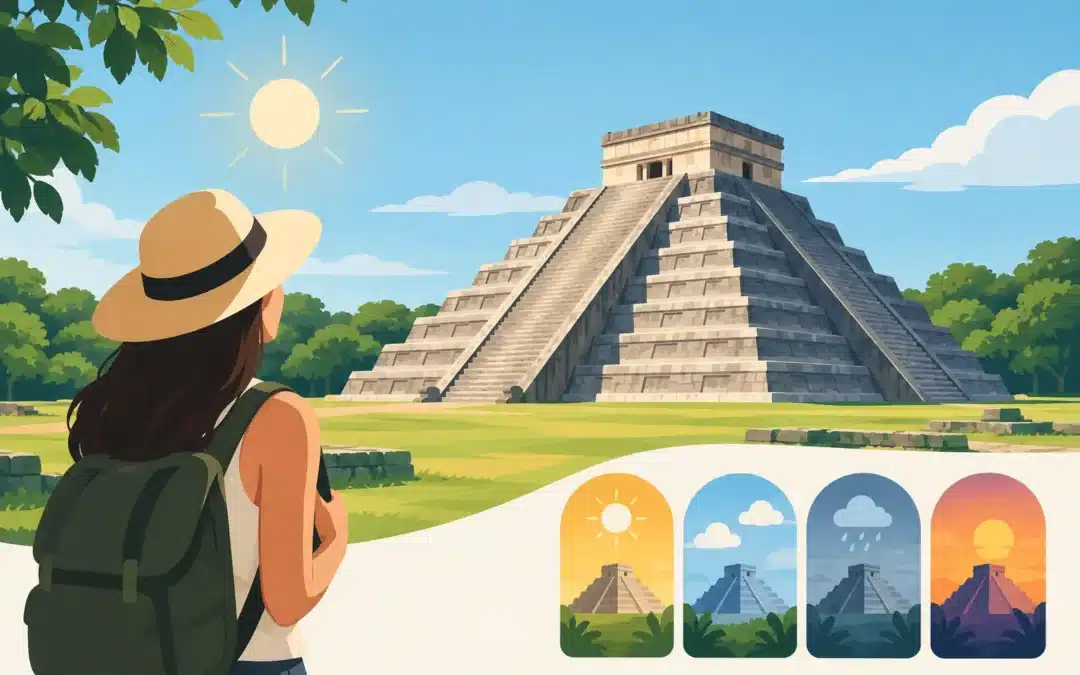
The pyramid is waiting, but the hour you arrive can change the whole experience. The best time to visit Chichen Itza is usually early morning, especially when you stay in Valladolid and can leave before the big buses arrive. You will walk in cooler air, hear your guide clearly, and photograph El Castillo before the midday sun turns every open plaza into a heat trap.
Chichen Itza is one of the great Maya cities, and it deserves more than a rushed stop between beach hotels. Plan your visit around the weather, the seasonal crowds, and what you want most from the day: archaeology, photography, family comfort, or time to swim in a cenote afterward.
The best time to visit Chichen Itza is early morning
For most travelers, arrive as close to opening time as possible. The grounds are broad and exposed, with limited shade once you move away from the entrances and vendor areas. Morning light is softer, temperatures are more manageable, and the pathways feel calmer.
This is especially valuable if you want to spend time at El Castillo, the Great Ball Court, the Temple of the Warriors, and the Sacred Cenote without feeling pushed along by a large crowd. A local guide can bring the stones to life when there is room to pause, ask questions, and look closely at the carved details.
Starting early also gives you options. After exploring the archaeological site, you can cool off in a cenote, enjoy a relaxed Yucatecan lunch, or return to Valladolid with enough energy for an evening walk around the main square. A good Chichen Itza day should not feel like a race.
Why not arrive at noon?
Midday is the toughest time at Chichen Itza. From late morning through early afternoon, heat and humidity build quickly, particularly from April through August. Tour groups commonly arrive during these hours, too, so entrance areas and the main viewpoints become busier.
If noon is your only option, you can still have a meaningful visit. Bring water, a hat with a brim, sunscreen, and light clothing that covers your shoulders. Set a slower pace and consider pairing the ruins with a cenote afterward. Just know that the experience will be hotter and more crowded than an early start.
Choose your season based on what matters most
There is no single perfect month for every traveler. Yucatan has a tropical climate, and each season comes with a trade-off. The right choice depends on whether you prioritize dry weather, fewer visitors, lower-season travel, or lush landscapes.
November through March: cooler weather, bigger crowds
Many visitors consider late fall through early spring the most comfortable season. Days are generally less hot than summer, and rain is less frequent. December, January, and February can feel especially pleasant for travelers used to cooler climates.
The compromise is demand. Holiday weeks, spring break, and popular travel dates bring more visitors to Chichen Itza and to Valladolid. Book transportation and small-group experiences in advance if your dates are fixed. Morning timing matters even more during this period.
April and May: hot, dry, and great for early risers
April and May are often the hottest months. The sky can be brilliantly clear, which is excellent for photos, but the sun is intense. If you travel then, leave Valladolid early, tour the ruins in the morning, and plan a swim before lunch or afterward.
This season suits active travelers who do not mind an early wake-up call. It is also a smart time to build your itinerary around shade, water, and slower afternoons. Visit Chichen Itza first, then make the rest of the day about a refreshing cenote and local food.
June through October: green landscapes and afternoon rain
Summer and early fall bring higher humidity, warmer temperatures, and the rainy season. Rain often comes as a strong afternoon shower rather than an all-day event, although weather can always surprise you. The landscape becomes beautifully green, and mornings can still be excellent for ruins.
Visitor numbers may be lighter outside major vacation dates, which can be appealing if you prefer a quieter atmosphere. Pack a compact rain jacket, protect your phone and camera, and stay flexible. Hurricane season also falls within these months, so check forecasts carefully if you are traveling from August through October.
Avoid the busiest days when you can
If your schedule allows, choose a weekday. Tuesdays through Thursdays often feel easier than weekends, though crowd levels shift with school holidays, cruise schedules, and major travel seasons. Sundays can be especially busy because Mexican citizens receive free admission with valid identification, bringing more local visitors to the site.
Equinox dates in March and September attract travelers hoping to see the famous light-and-shadow effect that resembles a serpent moving along El Castillo. It is a remarkable moment, but it is not a quiet one. Expect very large crowds, tighter logistics, and less personal space. Choose the equinox if that spectacle is your priority. Choose another morning if you want to study the site at a more relaxed pace.
Plan from Valladolid for a better Chichen Itza day
Valladolid is one of the best bases for visiting Chichen Itza. It is close enough for an early departure, yet far more connected to the culture and rhythm of eastern Yucatan than a quick stop from the coast. Spend the night in town, wake up early, and let the day unfold naturally.
A small-group or private tour can make the logistics easier. You do not need to worry about navigating, parking, or figuring out where to go first. More importantly, you can visit with a guide who understands the Maya history behind the buildings and the living culture around them.
With MexiGo Tours, travelers can start from Valladolid, reach the site early, and combine the ruins with the kind of experience that fits their travel style. Some want a quiet cenote swim after the heat. Others want regional food, a bike ride, or another archaeological site. The best itinerary leaves room for both the famous pyramid and the places that make Yucatan feel personal.
What to bring for a comfortable visit
Chichen Itza is a protected archaeological site, not a shaded museum. Comfort comes down to preparation. Wear breathable walking shoes with grip, since paths can be uneven and slick after rain. Bring a reusable water bottle, sun protection, sunglasses, and a hat.
For photos, morning offers gentler light and fewer people crossing your frame. A wide-angle lens works well for El Castillo and the Temple of the Warriors, while a phone is enough for most travelers. Do not plan on climbing the major structures. Access rules protect both visitors and the ancient buildings, so enjoy the architecture from the ground and let your guide point out the details you might otherwise miss.
If you are visiting with children or older family members, keep the morning plan simple. Focus on a few major areas instead of trying to see every corner in peak heat. A shaded lunch and a cenote stop can turn a demanding sightseeing day into a family favorite.
How long should you spend at Chichen Itza?
Plan on two to three hours inside the archaeological zone for a satisfying first visit. That gives you time to understand the site’s scale without exhausting yourself. History lovers and photographers may want longer, especially in cooler months.
Do not underestimate the travel day around the ruins. The best visits have a clear rhythm: an early start, a guided walk through the city, water and food at the right time, then a second experience that fits your energy. You can add a cenote, explore Valladolid, or simply take the afternoon slowly.
The best time to visit Chichen Itza is not only about a month on the calendar. It is about giving this extraordinary Maya city your freshest hours, then leaving space to swim, taste, and meet the Yucatan beyond the pyramid.


