
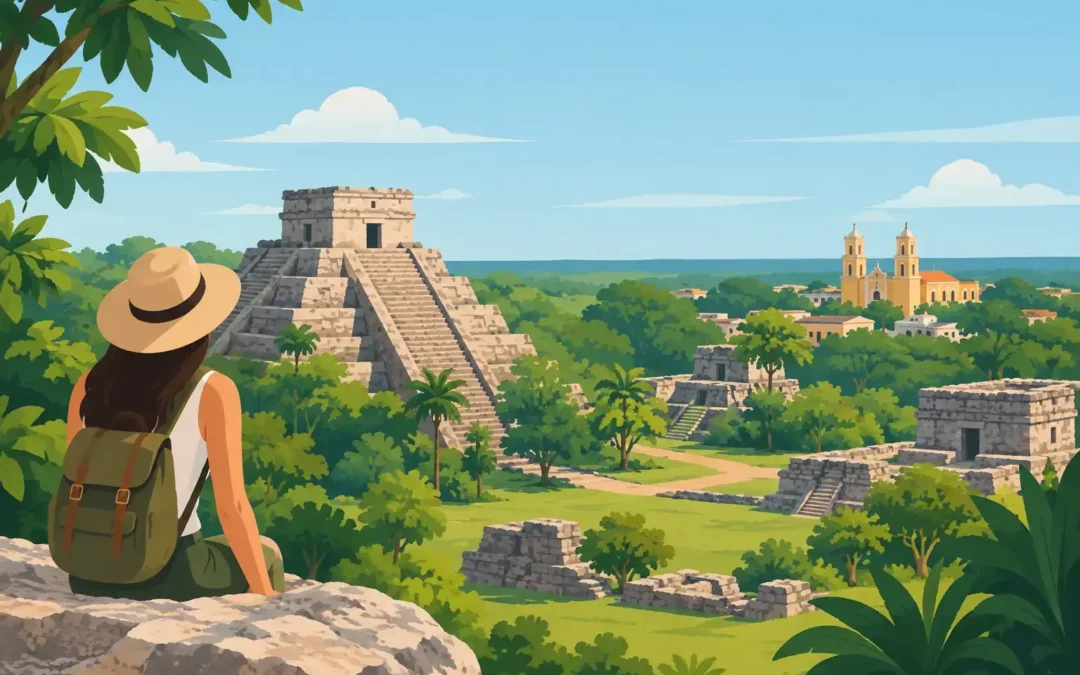
Valladolid is more than a beautiful colonial stop between Cancún and Mérida. It is one of the best bases in Yucatán for stepping into the ancient Maya world before lunch, then swimming in a cenote before sunset. The best ruins near Valladolid range from world-famous pyramids to quiet jungle plazas where the sound of cicadas replaces tour-bus noise.
The right choice depends on your travel style. Want an iconic wonder with big architecture and big stories? Go to Chichén Itzá early. Want to climb high above the trees and see detailed stucco art? Choose Ek Balam. Want a longer adventure with bikes, jungle paths, and a lagoon? Make a day of Cobá.
Here are seven archaeological sites worth considering from Valladolid, plus the practical details that make the day feel easy rather than rushed.
1. Chichén Itzá: the essential Maya landmark
About 45 minutes west of Valladolid, Chichén Itzá is the site most travelers have pictured long before arriving in Mexico. El Castillo, also called the Temple of Kukulcán, is extraordinary because it is not simply large. Its geometry, astronomical design, and famous serpent-shadow phenomenon show how carefully Maya knowledge was built into stone.
Give yourself at least two to three hours inside. Beyond the pyramid, walk to the Great Ball Court, the Temple of the Warriors, and the Sacred Cenote. Each tells a different part of the city’s story: ceremony, political power, trade, sport, and belief.
The trade-off is obvious: this is the busiest site in the region. Arrive at opening time if you want cooler temperatures, clearer photos, and a calmer first hour. A small-group tour with early transportation can also remove the stress of parking, ticket lines, and navigating the large site in midday heat. Pair it with a cenote swim and a relaxed Yucatecan lunch for a full day that still feels balanced.
2. Ek Balam: climb above the Yucatán canopy
Ek Balam is roughly 30 minutes north of Valladolid, and it feels completely different from Chichén Itzá. The site was an important Maya city, but it has a more intimate scale, greener surroundings, and an atmosphere that invites you to slow down.
Its highlight is the Acropolis, a massive structure with remarkable sculpted decoration around the tomb of a ruler known as Ukit Kan Le’k Tok’. The carved entrance resembles an open-mouthed earth monster, with winged figures and intricate details that reward a close look. Access rules can change, so do not plan your day around climbing any particular structure. Even from ground level, Ek Balam is one of the most impressive sites in eastern Yucatán.
This is an excellent choice for families, couples, and travelers who want serious archaeology without spending the whole day in crowds. Add nearby Cenote X’Canché if you want to cool off after the ruins. You can swim, rappel, or simply enjoy a quiet break under the trees.
3. Cobá: jungle roads, ancient paths, and active exploring
Cobá lies about 75 to 90 minutes from Valladolid, farther than Chichén Itzá or Ek Balam but well worth the drive for active travelers. The ancient city sits within a forested landscape near lagoons, and its buildings are spread across a large area. This is not a site for standing in one plaza and checking a box. Cobá asks you to move.
Rent a bicycle or hire a tricycle taxi at the entrance, then travel between groups of temples along shaded paths. Look for sacbeob, the raised white roads built by the Maya to connect Cobá with other settlements across the peninsula. One of them once stretched all the way toward Yaxuná, a powerful reminder that these cities were part of a connected world.
Cobá works especially well if you have a full day and enjoy being outdoors. Bring water, sun protection, insect repellent, and comfortable shoes. The jungle can feel more humid than Valladolid, particularly in the rainy season. Combine the visit with a cenote near Cobá or a stop in Tulum only if you are comfortable with a very long day. For most travelers, Cobá and a cenote are enough.
4. Yaxuná: a small site with a big connection
Yaxuná is one of the quieter ruins near Valladolid, around an hour by road depending on your route. It does not have the scale of Chichén Itzá or the dramatic structures of Ek Balam, and that is exactly why some travelers love it. You may find more space to listen, look, and imagine daily life beyond the region’s best-known capitals.
The site is historically significant because of its connection to Cobá by sacbé. Later, Chichén Itzá expanded its influence over the area, making Yaxuná a useful place to understand that Maya history was not frozen in time. Cities grew, competed, built alliances, and changed course over centuries.
Choose Yaxuná if you have already visited the major sites or if you are looking for a less conventional cultural day. It pairs naturally with a community experience, a regional meal, or a cenote rather than a packed schedule. Ask locally about current access and road conditions before setting out.
5. Kulubá: for travelers who want the road less traveled
Kulubá sits farther north of Valladolid, near the town of Tizimín. It is a longer outing, generally better for travelers with a private driver, rental car, or a carefully planned tour. The journey is part of the appeal: small towns, ranchland, and forest replace the main tourist corridor.
The site is known for its Puuc-style features and recently restored structures. You will not find the polished visitor infrastructure of Chichén Itzá here, but you may find something increasingly rare: time and quiet. Kulubá can feel more like an archaeological encounter than a major attraction.
This is not the best first ruin for a short stay in Valladolid. Choose it if you have already seen the classics, enjoy photography, and are comfortable with a flexible day. Services can be limited, so bring snacks and water, and confirm opening conditions in advance.
6. Xkambó: Maya ruins by the coast
Xkambó is not the closest option, but it makes sense for travelers who want to combine archaeology with the northern coast. Located near Telchac Puerto, this former Maya settlement was tied to salt production and trade. The setting is flat, open, and very different from the inland jungle around Valladolid.
You will see low temples, plazas, and traces of a city shaped by its relationship with the sea. Flamingos and other birdlife may be part of the wider coastal landscape, depending on the season and route. The trade-off is driving time. This is best as part of a coastal day rather than a quick half-day visit.
If wildlife is high on your list, consider planning a longer northern Yucatán route that includes wetlands, local food, and a coastal town. The ruins add history to a day that is otherwise focused on nature.
7. Chichén Viejo: a quieter side of Chichén Itzá
For travelers who want more than the standard Chichén Itzá route, Chichén Viejo offers an important extension of the experience. This separate section of the archaeological zone has ceremonial and residential structures that reveal another side of the city. Access and visit procedures may vary, so check current arrangements before making plans.
The appeal is not a second giant pyramid. It is context. Seeing less-visited areas can make the main site feel less like a single monument and more like the complex, living city it once was. If you are especially interested in Maya architecture, elite residences, and conservation work, this is worth asking about.
How to choose among the best ruins near Valladolid
If this is your first trip to Yucatán, choose one major site rather than trying to collect several in a day. Chichén Itzá is the classic choice for first-time visitors. Ek Balam is the best fit for a shorter, more relaxed archaeological outing. Cobá is ideal for travelers who want movement, jungle, and a longer adventure.
Traveling with children or avoiding the strongest heat? Ek Balam plus a cenote is hard to beat. Interested in photography and quieter paths? Consider Yaxuná or Kulubá, with realistic expectations about facilities. Want to understand how Maya cities connected across the peninsula? Combine Cobá and Yaxuná over separate days rather than rushing between them.
Timing changes everything. Start early, especially from March through September, when midday heat can be intense. Wear breathable clothing, use reef-safe sunscreen before entering a cenote, and carry more water than you think you need. Archaeological sites have uneven ground, exposed plazas, and limited shade in places.
A local guide adds much more than dates and names. The best guides help you notice a carved symbol, a building alignment, the meaning of a sacbé, or the difference between Maya life in the past and Maya communities in Yucatán today. At MexiGo Tours, small-group and private outings from Valladolid can combine ruins with cenotes, food, and local experiences without turning the day into a race.
Leave room for one unscheduled moment: a slow lunch in a village, a swim beneath limestone walls, or a few quiet minutes facing an ancient plaza. Those are often the moments that stay with you longest.


