
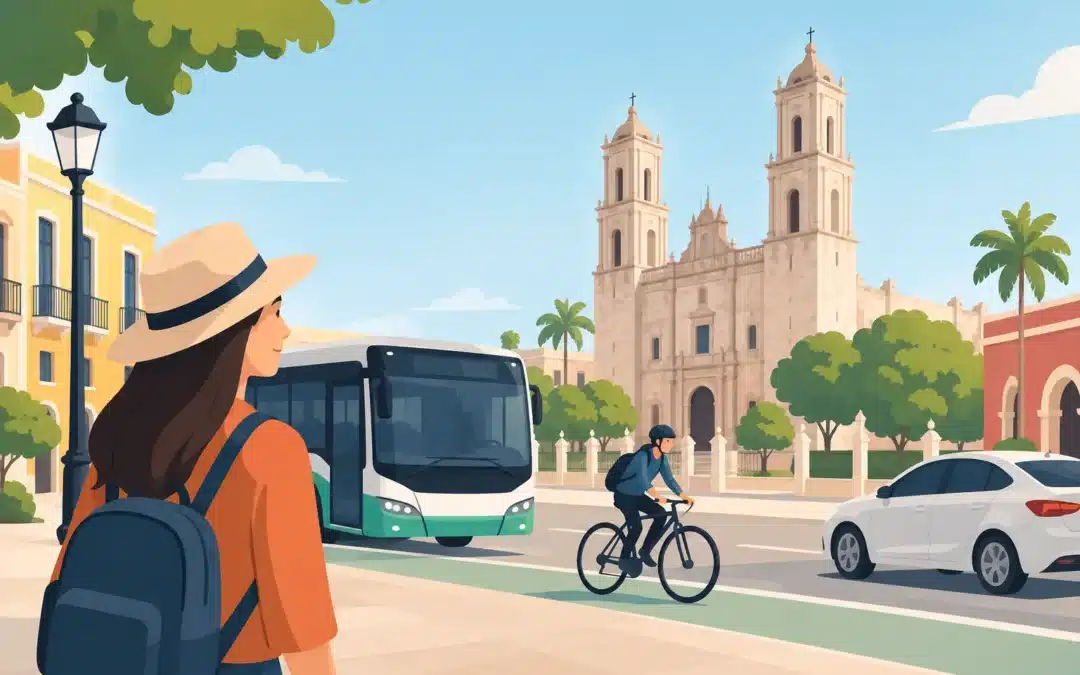
The best Valladolid transportation plan often starts with a simple decision: stay close to the center and save your driving energy for the places that truly need wheels. The city is wonderfully walkable around Parque Francisco Cantón, but cenotes, Maya villages, and archaeological sites spread out quickly beyond the colorful streets. Choose the right ride for the day, and you can spend more time swimming, tasting, and exploring.
Valladolid Transportation Starts on Foot
Valladolid’s historic center is made for walking. From the main square, you can reach churches, cafés, local markets, restaurants, and many hotels in a relaxed 10 to 20 minutes. Early morning is especially beautiful: the sidewalks are cooler, the streets are quieter, and you can watch the city wake up before heading out on an adventure.
Walking is also the easiest way to enjoy the details that make Valladolid memorable. Look up at the colonial facades, pause for a fresh fruit juice, and follow the side streets toward the Calzada de los Frailes. There is no need to arrange a vehicle for a dinner reservation in the center or a visit to the convent area.
The trade-off is heat. Midday sun can be intense, particularly from late spring through early fall. Carry water, use sun protection, and plan a shaded break instead of trying to cross town at the hottest hour. At night, walk on well-lit streets and use a taxi or arranged ride if your accommodation is far from the center.
Bikes Are Great for Short, Active Days
A bicycle gives you more range without losing the feeling of moving through the city. It is a fun choice for the center, the Calzada de los Frailes, and nearby attractions such as Cenote Zací. Families and confident riders often enjoy a relaxed bike outing in the morning, before traffic and heat build.
Bike rental works best when your route is straightforward and you are comfortable sharing roads with cars, motorcycles, and delivery vehicles. Helmets, lights, and a good lock matter. Ask where you can safely leave the bike before riding to a restaurant, cenote, or museum.
For longer distances outside town, cycling becomes more dependent on your experience, the weather, and the road. A ride to a remote cenote can be rewarding, but narrow shoulders, limited shade, and afternoon rain can change a pleasant plan fast. If you want the active experience without the logistics, choose a guided bike route with local support.
When a Bike Is Better Than a Car
Use a bike when the journey is part of the experience. It is ideal for slow streets, local neighborhoods, and places where you want to stop for photos or snacks. Use a car or transfer when the goal is to reach an archaeological site early, carry swim gear, travel with young children, or return after dark.
Taxis and Private Transfers: The Easy Local Option
Taxis are practical for short rides around Valladolid, hotel pickups, restaurant trips, and quick journeys to nearby cenotes. Agree on the fare before getting in, especially for destinations outside the central area. Cash is the simplest payment method, so keep small Mexican peso bills available.
For a half-day or full-day outing, a private transfer can make the entire day calmer. You choose the pickup time, keep your luggage and towels with you, and avoid figuring out where the return ride will come from. This matters at cenotes and rural communities, where taxis may not be waiting when you are ready to leave.
Private transportation is especially useful for couples, families, and groups of friends who want to combine several stops. Think Chichén Itzá with a cenote swim, Ek Balam with lunch in town, or a sunset return from a quiet village. The cost can be higher than public transportation, but shared among several travelers, it may be the most comfortable option.
If you are joining a small-group day trip, confirm what transportation is included before booking. A local operator such as MexiGo Tours can be a smart fit when you want a guide, planned timing, and transport in one experience rather than coordinating each piece yourself.
Colectivos and Buses for Independent Travelers
Colectivos are shared vans or small buses that serve routes between towns and nearby communities. They are affordable, local, and useful for travelers with flexible schedules. You may find them on routes toward places such as Chichén Itzá, Tizimín, or other regional hubs, though departure points and schedules can vary.
The big advantage is price. The big trade-off is certainty. Colectivos generally leave when they have enough passengers, make local stops, and may not match the return time you have in mind. They are best for travelers who speak some Spanish, have time to spare, and enjoy a less structured day.
ADO-style buses and regional buses are better for longer intercity connections. They can be useful when arriving from Cancún, Mérida, Playa del Carmen, Tulum, or other parts of the peninsula. Buy tickets early for popular travel times when possible, and build in extra time. Bus stations are functional, but they are not always close to every hotel or attraction.
Public transportation can get you near a destination, but not necessarily to the entrance gate, cenote, or trailhead. Before you leave Valladolid, know three things: where you will arrive, how far you need to walk, and how you will return. A low-cost ride out can become inconvenient if the last shared van has already passed.
Renting a Car Gives You Freedom, Not Always Ease
A rental car offers the most freedom for a multi-day stay. It is a strong option if you want to visit remote cenotes, photograph quiet roads, move at your own pace, or create an itinerary that includes several places in different directions. It is also convenient when traveling with a lot of gear or a larger family.
Driving in the Yucatán is usually manageable, but it still calls for attention. Speed bumps can appear suddenly, village traffic moves differently than highway traffic, and fuel stations are less frequent on some rural routes. Avoid driving after dark when possible, especially on unfamiliar roads. Potholes, animals, bicycles, and limited lighting are all more difficult to spot at night.
Parking in Valladolid is easier outside the busiest blocks of the historic center. Choose a hotel with parking if you plan to keep a car overnight, and never leave valuables visible inside. For major sites, arrive early not only for cooler temperatures but also for better parking and a more peaceful first hour.
A car is not automatically the best choice for Chichén Itzá or Ek Balam. If you are only visiting one major site, a guided trip or private transfer removes the need to navigate, park, and plan the route back after a long hot day. The best option depends on whether you value flexibility more than local insight and rest.
Plan Transportation Around the Experience
In Valladolid, transportation is not just a way to get from one pin on a map to another. It shapes your day. An early pickup can mean seeing ruins before the largest crowds arrive. A private ride can mean staying longer in a cenote when the water is perfect. A bike can turn an ordinary morning into a closer look at everyday life in town.
For the smoothest itinerary, group destinations by direction rather than trying to cross the region repeatedly. Put Chichén Itzá and nearby cenotes on one day. Pair Ek Balam with a swim or a local meal in the same area. Save the center, a bike ride, or a cooking experience for a day when you want to move slowly.
Ask about pickup times, return times, air conditioning, child seats, luggage space, and whether entrance fees are included. These details are small until they are not. Clear transportation planning leaves room for the good surprises: a roadside fruit stand, a hidden cenote, a conversation with a local guide, or one more swim before heading back to Valladolid.


