
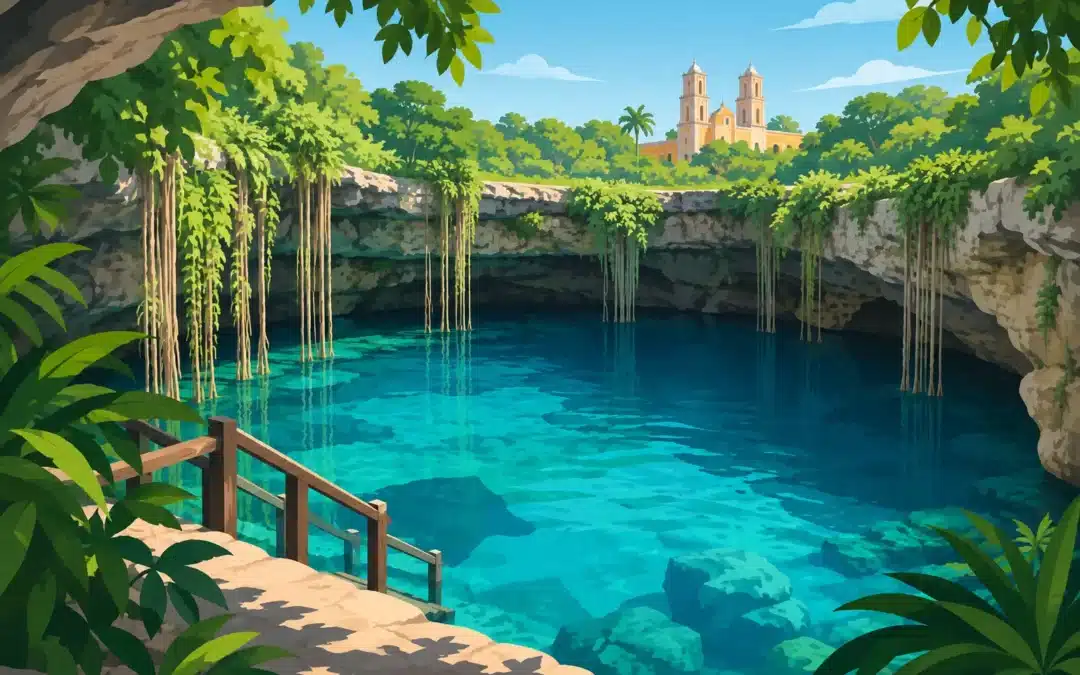
The best swim of your Yucatán trip may begin on a quiet village road, far from the entrance lines at Valladolid’s famous cenotes. The hidden cenotes near Valladolid Mexico are not always marked by big signs or polished facilities. That is exactly their appeal. You trade some convenience for clear water, dramatic limestone, birdsong, and the feeling that you have found a place still tied to the daily life of a Maya community.
Valladolid is an ideal base for this kind of day. Within an easy drive, the landscape shifts from colonial streets to milpa fields, small villages, old haciendas, and jungle trails. Some cenotes are open wells glowing in the sun. Others sit beneath high rock domes, where roots reach down through the ceiling and swallows circle above the water.
Here are eight cenotes and cenote areas worth considering when you want more than the standard photo stop.
8 hidden cenotes near Valladolid, Mexico
1. Cenote Palomitas
Near the village of Xcan, Cenote Palomitas is one of the most memorable underground swimming spots in the region. A round opening in the earth reveals a huge limestone chamber, with long vines and roots falling toward blue water below. A wooden stairway leads down, and a small platform makes entering the water easy.
It is popular enough to have facilities, but it often feels calmer than the cenotes closest to Valladolid. Arrive early, especially during high season, and you may hear more birds than voices. The scale of the cavern makes it a favorite for photographers, but bring a dry bag if you want your camera near the water.
2. Cenote Agua Dulce
Agua Dulce is close to Palomitas, which makes the pair a smart choice for one relaxed day. The name means “fresh water,” and the cenote feels wonderfully open after the enclosed drama of its neighbor. Sunlight reaches the swimming area, the water is clear, and fish often gather near the steps.
Visiting both gives you two very different moods without spending the whole day in a vehicle. Palomitas is about the cavern. Agua Dulce is about floating beneath the open sky. If you are traveling with children or less confident swimmers, this combination can work particularly well because access is generally straightforward.
3. Cenote Xcanche
Cenote Xcanche sits near Ek Balam, so it is a natural reward after walking through one of Yucatán’s most impressive archaeological sites. The cenote is deep, green-blue, and surrounded by tall walls covered in vegetation. You descend a long staircase into a cool, shaded world.
This is not the quietest option at midday because many visitors pair it with Ek Balam. Go early or visit after the main archaeological crowds have moved on. The extra activity options sometimes offered here, such as rappelling or zip lines, suit adventurous travelers, but a simple swim is enough to enjoy the setting.
4. Cenote Sac Aua
North of Valladolid, Cenote Sac Aua rewards travelers willing to leave the standard circuit. Its extraordinary feature is a small island of earth and vegetation floating beneath the cave opening. Light filters through the roof, giving the chamber a theatrical, almost unreal look.
The water can appear darker than at open-air cenotes, which is normal in a deep cave environment. This is a place to slow down rather than rush through for a quick swim. Ask locally about current access conditions before you go, as services and opening times in smaller communities can change.
5. Cenote Lol-Ha
Cenote Lol-Ha, near Yalcobá, is a good choice for travelers who enjoy a more local feel. The experience is simpler: less resort atmosphere, more village rhythm. You may find families spending the afternoon nearby, evidence that cenotes are not just attractions but part of the region’s living landscape.
The cave formations are a highlight, and the shaded water offers real relief after a hot morning outdoors. Facilities can be more modest than at larger sites, so bring water, cash, a towel, and realistic expectations. The comfort comes from the setting, not from luxury amenities.
6. Cenote Chukum-Ha
Cenote Chukum-Ha is farther from Valladolid than the Dzitnup-area cenotes, but it is a strong option for travelers heading toward Cobá or looking for a full-day adventure. Inside, the cavern is wide and high, with mineral formations, clear water, and shafts of light that change as the day moves on.
It is more developed than some truly remote cenotes, but its setting still feels wild. The distance is the trade-off. This is not a quick stop between breakfast and lunch. It works best when you have private transportation or an itinerary that combines it with another destination in the same direction.
7. Cenote Secreto Maya
In the Xcan area, Cenote Secreto Maya offers a more intimate alternative for travelers who want to get away from the largest groups. The route there takes you through rural surroundings, and the cenote itself has the quiet, enclosed feeling many people imagine when they picture a sacred freshwater cave.
Because smaller cenotes may have limited staff or variable services, flexibility matters. Don’t assume every place accepts cards, rents lockers, or has a restaurant. Come prepared, follow the community’s rules, and enjoy the fact that not every experience has been designed around a bus schedule.
8. Cenotes around Dzitnup, beyond the famous stops
The villages of Dzitnup and nearby communities are best known for Cenote Xkeken and Cenote Samulá. They are beautiful, but they can be busy. The useful local strategy is not necessarily to skip the area entirely. Instead, ask about lesser-known community cenotes or smaller swimming holes nearby, particularly if you have a local guide who knows which entrances are operating that day.
Conditions change with rainfall, maintenance, and community events. A hidden cenote is not a fixed checklist item. It is often a local recommendation, a turn down an unpaved road, and a visit timed well.
How to choose the right cenote day
Start with the experience you want. For giant cave drama, choose Palomitas, Sac Aua, or Chukum-Ha. For an easy swim with daylight and space, Agua Dulce is a strong fit. If ancient Maya history is high on your list, pair Xcanche with Ek Balam and make a full day of it.
Distance matters more than many visitors expect. Valladolid looks close to everything on a map, but rural roads, heat, and multiple stops can make a self-drive day feel longer than planned. A small-group or private outing removes the navigation pressure and gives you more time in the water. MexiGo Tours can help shape a route around your interests, whether that means a quiet cenote swim, a Maya village meal, or an active day that combines ruins, bicycles, and jungle.
Timing makes a major difference. Morning is usually best for cooler temperatures and fewer visitors. Midday sunlight can create beautiful beams inside open-roof cenotes, but it also brings more people and stronger heat on the road. If you are traveling from December through April, reserve transportation and guided outings ahead. During the rainy season, ask about water levels and weather before setting off.
Swim respectfully in a living landscape
Cenotes are part of Yucatán’s freshwater system and hold deep cultural significance for Maya communities. A respectful visit protects the water and improves the experience for everyone. Shower before entering when facilities are available, skip sunscreen and body oils before swimming, and never touch stalactites or climb on rock formations. They take thousands of years to form and are easily damaged.
Bring a reusable bottle, water shoes, a towel, dry clothes, and cash in small bills. Life jackets are required at many cenotes, even for strong swimmers. That rule is about safety and preservation, not swimming ability. Follow it without argument.
The most rewarding cenote days leave room for surprise. Choose one or two places, stay long enough to float quietly, and let the road between them become part of the adventure. In this corner of Yucatán, the best hidden place is often the one you reach with curiosity, care, and time to truly enjoy it.


