
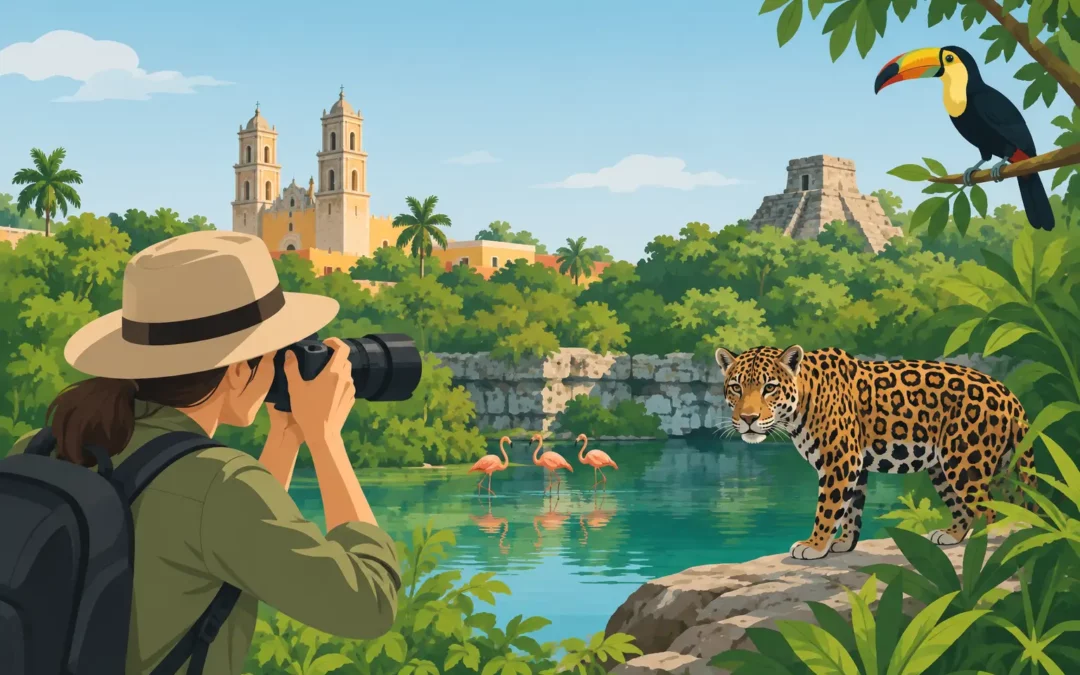
The first flamingo appears as a pale pink mark across the water. Then the morning light rises, the flock shifts, and Río Lagartos suddenly becomes a moving field of color. A Yucatan wildlife photography tour is not about rushing from one stop to another with a camera in hand. It is about getting out early, reading the light, listening for movement in the trees, and giving nature enough time to come into focus.
From Valladolid, you can reach some of the peninsula’s most rewarding habitats in a day: coastal wetlands filled with flamingos, jungle trails where spider monkeys travel overhead, quiet lagoons, cenotes, and villages surrounded by birdlife. Come with us and photograph Yucatán beyond the ruins.
Why a Yucatan Wildlife Photography Tour Is Different
Yucatán wildlife is often subtle before it is spectacular. A motmot may sit motionless in deep shade. A crocodile may look like part of the shoreline. A monkey troop can be heard long before it is seen. The best photos usually come from patience, smart timing, and a guide who knows when to stop.
That is why a small-group or private experience makes a real difference. You have room to ask for a few extra minutes when the light is right, adjust your position carefully, and avoid competing with a large crowd for the same view. Your guide can help you understand the habitat, identify what you are seeing, and approach wildlife without disturbing it.
A wildlife day also adds something special to a Yucatán itinerary. Archaeological sites tell the story of the ancient Maya. Wildlife experiences show you the living landscape around them: mangroves, tropical forest, wetlands, and communities that have known these places for generations.
Choose Your Habitat: Flamingos or Monkeys
Your best route depends on the animals you hope to photograph, your camera setup, and how much time you have in Valladolid. The two standout experiences are very different.
Go Flamingo: Río Lagartos and the Northern Coast
Río Lagartos is the choice for wide-open scenes, reflective water, pink flamingos, wading birds, and dramatic skies. The biosphere reserve on Yucatán’s north coast contains mangrove channels, shallow lagoons, and salt flats that attract a remarkable variety of birdlife.
Flamingos are the headline, but do not spend the whole boat ride looking only for pink. Brown pelicans, herons, egrets, roseate spoonbills, cormorants, kingfishers, and occasional birds of prey create opportunities all along the route. Crocodiles may rest near the mangroves, often so still that they are easy to miss.
Early departures are especially valuable here. The air is cooler, the water can be calmer, and the low sun gives color and shape to feathers. Midday can still be productive, particularly for bright flamingo color and clean blue skies, but it brings harder shadows and more heat. If your priority is photographs rather than simply checking flamingos off your list, start early.
A longer lens is useful for portraits and bird behavior, while a mid-range zoom helps with boat scenes, landscapes, and birds that come close. Bring a dry bag or protective cover for your gear. You will be on the water, and a little spray is part of the experience.
Go Monkey: Punta Laguna’s Jungle Canopy
Punta Laguna offers a completely different kind of photography. This is Maya jungle: limestone paths, dense green vegetation, filtered light, and the sudden energy of black-handed spider monkeys moving through the canopy.
Monkey photography asks for more patience and quicker reactions than flamingo photography. You may need to look up, work around branches, and wait for a clear line of sight. The reward is a more intimate image of Yucatán’s forest life: a monkey pausing on a branch, a mother traveling with a young one, or a group leaping between trees.
The reserve can also offer opportunities to photograph birds, butterflies, reptiles, and the textures of the jungle itself. It is an excellent choice for travelers who prefer an active morning outdoors and want to combine wildlife observation with a meaningful visit to a Maya community.
Light in the forest is challenging. A fast lens helps, but it is not required. Raise your ISO when needed, use continuous autofocus for moving subjects, and do not be afraid of a little motion blur if it captures the feeling of a monkey in flight. A sharp eye and a lively frame can be more memorable than a technically perfect image.
Photograph Wildlife With Respect
The strongest wildlife images come from natural behavior, not pressure. Keep a respectful distance, stay quiet, and never ask a guide to get closer than conditions allow. Do not feed animals, call to them, play sounds from your phone, or use flash around sensitive wildlife.
On a boat, remain seated when asked and move slowly when changing sides. On jungle trails, stay with the group and let animals choose the distance. This protects you, the habitat, and the chance for the next travelers to have the same real encounter.
Your guide is also your best ally for ethical photography. Local guides know the signs of stress, the nesting periods to avoid, and the places where a quiet approach matters most. Their knowledge helps turn a quick sighting into a respectful observation.
What to Bring for Better Photos
You do not need a professional camera to enjoy this day. A phone with a good zoom can capture beautiful color, landscapes, and close moments. Still, the right preparation gives you more freedom when animals appear.
Bring the camera or phone you know how to use, plus a fully charged spare battery and extra memory card. A telephoto lens is ideal for birds and monkeys, but a 70-200mm or similar zoom is already very useful. A wider lens earns its place in Río Lagartos for mangroves, boats, and the huge coastal sky.
Wear light, breathable clothing in neutral colors. Add a hat, sunscreen, insect repellent, sunglasses, and closed shoes for jungle trails. For boat trips, a windbreaker can be welcome early in the morning. Pack water and a small snack, but keep your bag simple enough to move easily.
If you are using a phone, clean the lens before departure and turn on burst mode. For cameras, shoot in RAW if you are comfortable editing later. Most of all, keep your camera ready. Wildlife does not wait while you search through menus.
Build a Better Day From Valladolid
Valladolid is a practical base because it puts you close to jungle reserves, cenotes, Maya villages, and the roads leading north to the coast. The right plan depends on your pace.
A flamingo trip is usually a full-day commitment because of the distance to the coast. It works well for travelers who want a major nature experience and do not mind an early start. Consider adding time to enjoy local food after the boat ride, then return to Valladolid without having to drive yourself after a long day in the sun.
Punta Laguna can fit naturally into a day that also includes a cenote swim or a visit to Cobá. This combination is especially good for active travelers, families with older children, and photographers who want both forest wildlife and a refreshing break in clear water.
Trying to combine Río Lagartos, a major archaeological site, and several cenotes in one day usually means too much time in the vehicle and too little time with wildlife. A better photograph often comes from doing less. Give the habitat the morning it deserves.
At MexiGo Tours, local guides and small groups make it easier to travel at a comfortable pace, photograph responsibly, and experience the east of Yucatán as more than a checklist of famous places.
When to Go for Wildlife Photography
Yucatán offers wildlife encounters throughout the year, but conditions change with the seasons. Dry-season months generally bring sunny days, easier road conditions, and strong light. They can also bring more visitors to popular areas. The rainy season makes the landscape intensely green and can create dramatic skies, though showers and humidity require flexibility.
For flamingos, sightings vary with water conditions and seasonal movement, so it is wise to ask about current conditions when planning. Flamingos are not a studio subject. That is part of the appeal. For monkeys, early morning is often the best window, when the forest is cooler and more active.
If you are traveling with a serious photography goal, leave one flexible day in your itinerary. Weather, wind, and wildlife behavior all matter. A local team can help you choose the best route once you are in Valladolid.
Bring curiosity along with your camera. The image you remember most may not be the one you expected: a spoonbill lifting from the mangroves, a monkey watching quietly from above, or the moment the lagoon turns pink in the first light.


