
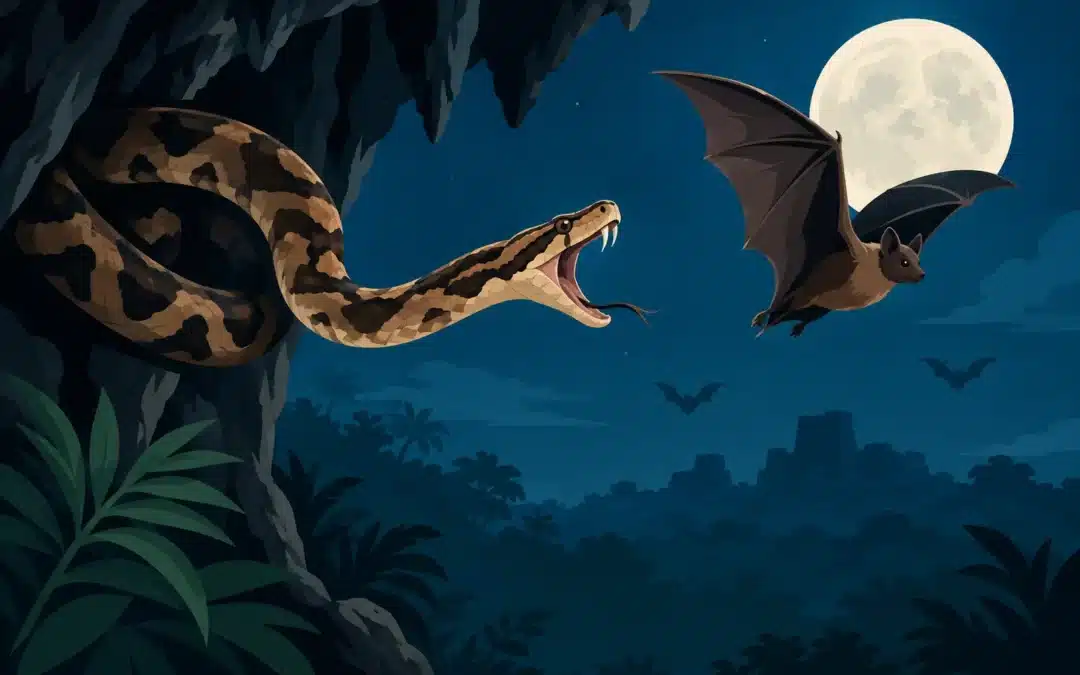
At sunset, a cave entrance in the Yucatan can shift from stillness to motion in minutes. Thousands of bats may begin to stream out into the dark, and patient snakes wait near the rock face for a single opportunity. Watching snakes hunting bats in Yucatan is not a staged show. It is a wild, fast, and surprisingly moving encounter with the peninsula’s nighttime ecosystem.
For travelers staying in Valladolid, this is the kind of evening that changes how you see the region. The day’s heat fades. The jungle sounds grow louder. Then, under the guidance of a local expert, you watch an ancient predator-prey drama unfold at the edge of a natural shelter.
What Happens When Snakes Hunt Bats in Yucatan
The moment depends on timing. Bats do not leave their roost one by one. At many sites, they emerge in a concentrated rush, flying close to rock walls, openings, and vegetation as they head out to feed. Snakes positioned near these flight paths can strike at passing bats or catch one as it moves close to the surface.
It happens quickly. You may see a snake remain almost perfectly still for a long time, then move in a fraction of a second. Sometimes there is a successful strike. Sometimes there is not. That uncertainty is part of the experience. Wildlife does not perform on command, and a responsible visit respects that reality.
The behavior is a reminder that caves, cenotes, and rocky shelters are more than beautiful places to swim or photograph. They are living habitats. Bats help support healthy landscapes by eating insects, pollinating plants, and dispersing seeds. Snakes are also essential predators in the food web. Seeing both animals in the same place offers a vivid look at the natural balance of Yucatan.
Why This Experience Feels Different
Many Yucatan adventures begin with ruins, colorful towns, or a refreshing cenote swim. A bat and snake observation adds something else: the feeling of being present for a natural event that most visitors never know exists.
There are no bright lights, loud groups, or scripted moments. You arrive near dusk, walk carefully into the observation area, and wait. Your guide helps you understand what you are seeing, where to stand, and why silence matters. The best moments often come after several quiet minutes, when your eyes adjust and the landscape begins to feel completely different from its daytime version.
It is also a strong choice for photographers who enjoy wildlife and low-light scenes. Still, the best photo is never worth disturbing an animal. The experience is first about observation. Cameras come second.
It Is Not a Guaranteed Catch
A good guide can choose a suitable season, location, and time of evening, but no one can promise a hunting event. Bat activity can change with weather, temperature, rain, wind, and conditions inside the roost. A snake may be present but stay hidden. Bats may emerge in a pattern that is difficult to see.
That does not make the evening less worthwhile. Listening to bats, spotting nocturnal movement, and learning how these habitats function can be memorable on their own. Travelers who arrive with patience usually enjoy the experience most.
When to Go Near Valladolid
The most important factor is sunset. The observation begins as daylight softens, so arriving on time matters. You will want enough light to walk safely, followed by enough darkness for the bats’ emergence to begin.
Season can affect what you see, but wildlife activity is never identical from one night to the next. Rainy evenings may bring a dramatic atmosphere, yet heavy rain can also make access more difficult and change animal movement. Dry-season conditions can make walking easier, though warmer temperatures may call for extra water and light clothing.
If this is a priority for your trip, leave some flexibility in your Valladolid itinerary. Pair it with a relaxed afternoon in town, a cenote visit, or a late lunch rather than scheduling a long archaeological day immediately before it. You will enjoy the evening more if you are not rushing from one activity to the next.
What to Wear and Bring
This is an outdoor nature experience, not a cave party. Dress for uneven ground, insects, humidity, and darkness. Closed-toe shoes with good grip are the right choice. Long, lightweight pants can be more comfortable than shorts around brush and rocky paths.
Bring water, insect repellent, and a small personal flashlight if your guide recommends one. Keep the beam pointed down when walking and turn it off when it is time to observe. Bright, direct light can interfere with the animals and with everyone’s night vision.
For photos, avoid flash completely. A phone in night mode or a camera with low-light capability may help, but do not expect perfect action shots. The bats move fast, conditions are dark, and the most meaningful memories may be the ones you simply watch.
How to Watch Wildlife Responsibly
The rule is simple: let the animals control the encounter. Stay with your guide, remain on the indicated path, and keep a respectful distance from all wildlife. Never touch a snake, approach a roost, throw objects, or try to make bats fly.
Silence makes a real difference. Soft voices help the group hear instructions and reduce disturbance. It also allows you to notice details that are easy to miss: wings moving overhead, leaves shifting near a wall, the sudden change in sound when bats begin to emerge.
A small group is especially valuable in a sensitive setting. Fewer people mean less noise, easier positioning, and a more personal conversation with the guide. With MexiGo Tours, the goal is to observe the real Yucatan with care, not to turn a wild habitat into a crowded attraction.
Is This Experience Right for You?
This evening works well for curious travelers, families with older children who can stay quiet and follow instructions, couples looking for an unusual night out, and wildlife photographers who understand the limits of low-light observation. It is a great contrast to a day of temples and cenotes.
It may not be the best fit for anyone with a strong fear of snakes, difficulty walking on natural terrain, or expectations of constant action. Ask about the walking conditions before you go, especially after rain or if you have mobility concerns. A local team can help you decide whether the route and timing suit your group.
The experience is also best for travelers willing to trade certainty for authenticity. You might witness a dramatic hunt. You might see bats flowing into the night while a snake waits unseen nearby. Either way, you will leave with a deeper respect for the life that begins when Yucatan’s daytime visitors head back to town.
Bring your curiosity, wear the right shoes, and give the night time to reveal itself. Some of the most unforgettable moments in Yucatan happen when you stand quietly, look up, and let nature set the schedule.


