
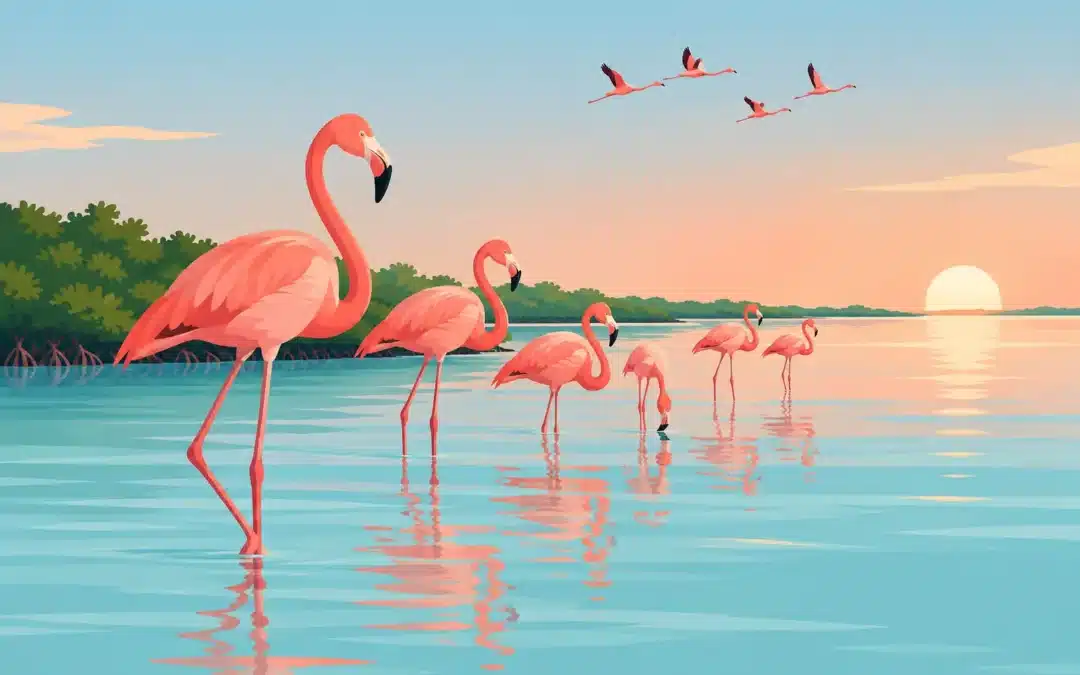
A pale pink line on the horizon can suddenly become thousands of American flamingos feeding, calling, and lifting together above the salt flats. That is the moment travelers come for during the flamingo migration season Rio Lagartos is known for. But there is one useful detail to understand before choosing your date: these flamingos do not follow a neat, one-week migration schedule.
Río Lagartos is a vast coastal wetland, not a zoo or a guaranteed single lagoon. Flamingos move within the reserve as water levels, food, weather, and breeding activity change. Visit with the right expectations, an experienced local captain, and a little flexibility, and you can enjoy one of Yucatán’s most memorable wildlife experiences.
When is flamingo season in Río Lagartos?
For most visitors, March through June is the strongest window for seeing large concentrations of flamingos in Río Lagartos. During spring, the birds gather in impressive numbers across the shallow, salty lagoons. Their color can look especially intense against the bright water and white salt banks, making this a favorite season for photographers and nature lovers.
April, May, and early June are often the most exciting months. This is when courtship and breeding activity can bring major groups together. You may see flocks standing shoulder to shoulder, feeding with their heads underwater, or moving across the lagoon in a wave of pink. It is a wild scene, and it deserves patience. The birds decide where the show happens.
Flamingos can be present year-round, so a visit outside spring is not a bad idea. From late fall through winter, conditions are usually cooler and more comfortable for a day trip from Valladolid. Birds may be more dispersed, though, and sightings can depend more heavily on the day’s water and weather conditions. If flamingos are your top priority, spring gives you the best odds of seeing the largest groups.
Why “migration season” is not an exact date
American flamingos in Yucatán are highly mobile. Rather than arriving and departing like birds on a fixed northern migration route, they shift among coastal wetlands in response to rainfall, salinity, food availability, and nesting conditions. A lagoon that is full of flamingos one week may look very different the next.
That is why promises of an exact peak day should be treated carefully. Nature does not work from a calendar. Local boat captains monitor the reserve constantly and know which areas are active, but even they cannot command the birds to stand in one spot for a photo.
The good news is that Río Lagartos is more than flamingos. The reserve also offers mangroves, crocodiles, pelicans, herons, egrets, frigatebirds, and wide-open coastal landscapes. A good wildlife tour feels rewarding even when the flamingos choose a distant feeding area.
The best time of day to see flamingos
Start early. Morning boat tours usually offer calmer water, softer light, cooler temperatures, and more relaxed wildlife viewing. Leaving Valladolid early also helps you avoid the strongest midday heat, especially from March through June.
The first hours after sunrise are excellent for photos. Flamingos often appear a softer pink under early light, while the sky and water hold more color. Later in the morning, the sun becomes bright and reflective, which can make the salt flats beautiful but more challenging to photograph.
Afternoon tours can still be enjoyable, particularly if the weather is mild or your schedule only allows a later departure. However, heat, wind, and afternoon storms in the rainy season can affect comfort and visibility. If you have a choice, choose the morning and give yourself time to enjoy the journey instead of rushing back.
What you may see on the boat ride
A Río Lagartos boat trip is an active search through a living wetland. Your captain may navigate narrow mangrove channels before opening into broad lagoons where flamingos feed. The route changes with conditions, which is part of the experience.
Keep your camera ready, but do not watch only through the screen. Crocodiles sometimes rest quietly along the banks. Ospreys and other birds may pass overhead. Mangrove roots create shelter for fish and smaller creatures, while the bright pink of flamingos can appear almost unreal against the green and blue landscape.
Flamingos eat by sweeping their specialized bills through shallow water and filtering tiny organisms, including shrimp-like creatures that contribute to their famous color. They are not naturally bubblegum pink. Their color comes from what they eat, and it can vary from pale blush to vivid coral.
During breeding periods, you may notice more social behavior and dense gatherings. This is also the moment to give them extra space. The best wildlife encounter is one that lets animals continue behaving like animals.
How to visit responsibly during Río Lagartos flamingo season
The flamingos are the reason many travelers come, but the reserve remains their home. Responsible viewing protects the birds and improves the experience for everyone. Boats should approach slowly, keep a respectful distance, and never chase a flock to force it into flight.
If flamingos begin moving away, calling loudly, or changing direction because of the boat, it is time to back off. A guide or captain who respects those signs is doing the right thing, even if it means your photos are taken from farther away.
Bring a zoom lens if photography matters to you. A phone can capture the scene, but binoculars or a camera with optical zoom help you observe without demanding a close approach. Avoid drone use unless you have verified that it is permitted and safe for wildlife. Drones can disturb birds, especially around nesting areas.
Please leave shells, feathers, and natural objects where you find them. Use reef-safe sun protection when possible, carry water in a reusable bottle, and do not feed any wildlife. Small choices matter in a wetland that supports thousands of birds and local fishing communities.
What to wear and bring from Valladolid
Río Lagartos sits on Yucatán’s northern coast, and the sun can be intense even early in the day. Wear light clothing, a hat that will stay on in the wind, sunglasses, and comfortable sandals or shoes that can handle a little water and salt.
Bring sun protection, drinking water, insect repellent, and a dry bag or waterproof pouch for your phone. A lightweight long-sleeve shirt is useful for both sun and mosquitoes. In the rainy months, add a compact rain jacket. The boat ride is exposed, so conditions can change quickly.
If you are traveling with children, choose a tour pace that leaves room for breaks, snacks, and shade. Families often love the wildlife, but young travelers are happier when the day is not built around one long, hot boat ride. Private trips can be especially helpful if your group wants more flexibility.
Planning the day: combine wildlife with local flavor
From Valladolid, Río Lagartos is best enjoyed as a full-day outing. The drive is part of the trade-off: you travel farther than you would for a nearby cenote, but you reach a completely different Yucatán landscape. Instead of limestone jungle and swimming holes, you get coastal wetlands, fishing villages, salt flats, and birdlife on a grand scale.
Many travelers pair a morning boat tour with time in the town of Río Lagartos or a meal of fresh regional seafood. Las Coloradas, known for its striking pink salt ponds, is also nearby, though access rules and water color vary. The flamingo reserve should remain the main event, while any stop at the salt flats is a bonus rather than a guarantee of postcard-perfect color.
A small-group trip takes away the stress of rental-car timing, route planning, and finding a reliable boat at the dock. With MexiGo Tours, you can leave from Valladolid, travel with a local guide, and focus on spotting wildlife instead of watching road signs.
Choose the season that fits your trip
Come between March and June if your dream is to see the largest flamingo gatherings and you do not mind warm weather. Choose November through February if you prefer cooler temperatures, fewer hot afternoons, and a chance to enjoy the reserve when the birds may be spread across different feeding areas. Summer can offer rewarding wildlife viewing too, but rain, humidity, and breeding-area protections may shape the route.
There is no wrong time to respect the pace of the wetlands. Set out early, listen for the first wingbeats over the lagoon, and let Río Lagartos show you what is moving that day.


