
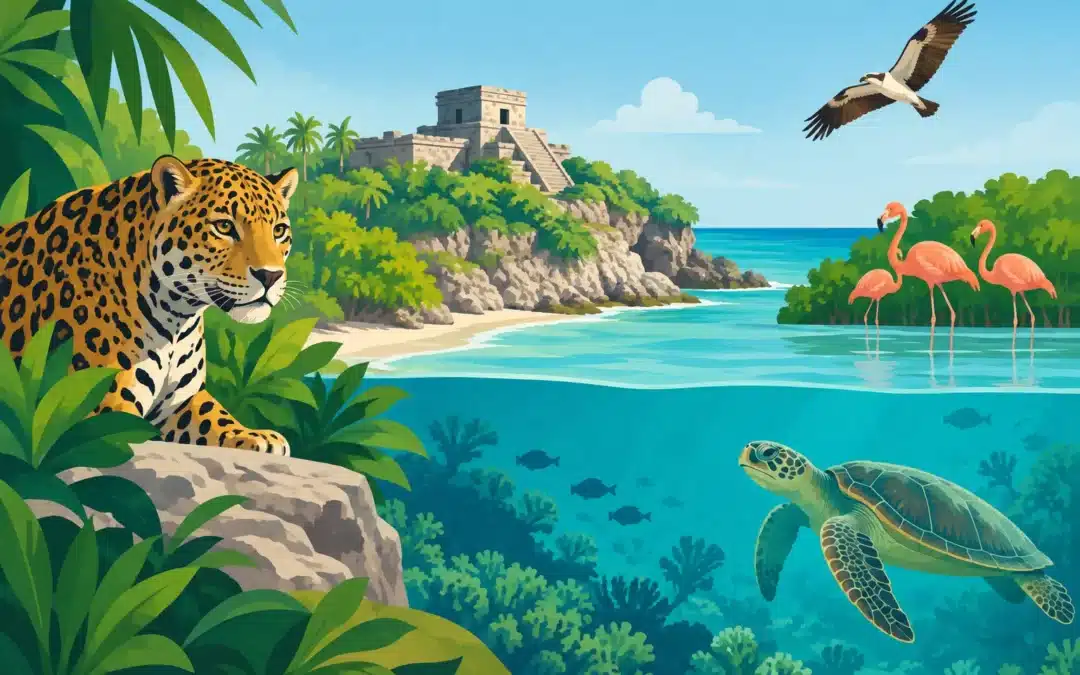
The best wildlife experiences Yucatan offers are not found behind glass or on a rushed bus stop. They happen at first light in a mangrove lagoon, on a quiet jungle trail, or beside a cenote after the daytime swimmers have gone. From Valladolid, you can reach places where flamingos feed in shallow water, spider monkeys move through the canopy, and nocturnal life takes over after sunset.
Wildlife trips here work best when they are planned around the animals, not simply fitted between archaeological sites. That may mean an early departure, a patient guide, muddy shoes, and fewer stops in one day. The reward is a Yucatan that feels alive, local, and far beyond the usual postcard route.
What makes wildlife viewing special in Yucatan?
Yucatan’s wildlife is tied to its landscapes. Coastal wetlands shelter flamingos, herons, crocodiles, and migratory birds. The tropical forest around Valladolid and the eastern Maya region supports monkeys, coatis, iguanas, reptiles, and hundreds of bird species. Cenotes add another world entirely, with bats, swallows, fish, and caves shaped by water over thousands of years.
The best encounters are never guaranteed. Flamingos may be farther out in the lagoon depending on the season and water level. Monkeys may be feeding high in the trees, hidden by leaves. A good local guide makes the difference: they know when to arrive, where to look, and when to stay quiet.
1. Go Flamingo at Rio Lagartos
Rio Lagartos is the classic choice for travelers who want to see flamingos in the wild. This protected coastal area sits north of Valladolid, where freshwater and saltwater meet among mangroves, marshes, and broad shallow lagoons. It is one of the most photogenic wildlife areas in the state, but it is much more than a pink-flamingo stop.
A boat ride through the biosphere can reveal brown pelicans, roseate spoonbills, cormorants, herons, egrets, and sometimes crocodiles resting along the banks. The mangroves are quiet at first, then suddenly full of movement. A tail slips into the water. A bird lifts off from the reeds. Flamingos gather in the distance, their color changing with the morning light.
When to go
Early morning is usually the most comfortable time to be on the water, especially during hot months. Flamingo sightings are possible year-round, although flock size and location change. Avoid expecting a fixed scene from social media. Nature sets the schedule here.
Bring sun protection, drinking water, and a camera with some zoom if photography matters to you. Most importantly, keep your distance. Flamingos are beautiful because they are free to feed, fly, and move through the wetlands without being chased for a closer photo.
2. Go Monkey at Punta Laguna
For a jungle experience, Punta Laguna is hard to beat. This Maya community reserve, located within reach of Valladolid, is known for its populations of spider monkeys and howler monkeys. The forest trail is not a zoo path. You walk beneath tall trees, listen for branches moving overhead, and follow your guide’s cues.
Spider monkeys are agile, social, and remarkably quick. You may spot them swinging through the canopy or hear leaves falling as they feed above you. Howler monkeys are often easier to hear before you see them. Their deep calls can travel far through the forest and make the jungle feel much larger than it is.
The experience is also about the community that protects this place. Local guides understand the animals’ habits and the changing conditions of the reserve. They can point out birds, butterflies, tracks, medicinal plants, and the details most visitors would walk past.
Punta Laguna is a strong choice for active travelers and families who want to combine wildlife with a little adventure. Depending on the experience and conditions, the day can also include canoeing on the lagoon or a zip line. Choose the pace that fits your group. If seeing monkeys is your priority, give the forest time and do not pack the day too tightly.
3. Look beyond flamingos at Rio Lagartos
Many visitors come to Rio Lagartos for one species and leave talking about the entire ecosystem. That is exactly how it should be. The wetlands are a major refuge for birdlife, and every boat route can feel different depending on weather, tide, season, and recent rainfall.
Watch the shoreline closely for crocodiles. They are often still and well-camouflaged, which is why you should only observe them from a boat with an experienced captain. Never approach, feed, or try to attract wildlife for a photo.
Bird lovers may want extra time here. Frigatebirds circle above, kingfishers flash across the water, and wading birds work the muddy edges. If your trip falls during migration periods, the variety can be especially impressive. Ask your guide what has been active recently instead of relying on a generic species checklist.
4. Experience a cenote after dark
A cenote visit is usually about swimming, clear water, and a break from the Yucatan heat. But after sunset, certain cenotes become a wildlife experience unlike anything else in the region. Bats emerge from cave openings to begin their night hunt, while other nighttime animals become more active around the forest and limestone walls.
At selected sites, visitors may also witness a remarkable seasonal behavior: snakes positioning themselves near cave entrances to catch bats in flight. It is dramatic, but it should always be observed with care and only under knowledgeable supervision. This is not a staged show, and nature does not perform on demand.
A nighttime cenote experience is best for curious travelers who do not need every moment to be predictable. Wear shoes with grip, bring a light layer for the cooler evening air, and follow safety instructions closely. Quiet observation matters more than flash photography.
5. Combine wildlife with Maya culture, not a rushed checklist
The strongest days in the eastern Maya region pair nature with place. You might begin with monkeys at Punta Laguna, cool off in a cenote, and finish with a meal prepared in a Maya community. Or leave Valladolid early for Rio Lagartos, spend the morning among the mangroves, then return before the hottest part of the afternoon.
Trying to combine flamingos, monkeys, Chichen Itza, cenotes, and a sunset dinner in one day usually means too much driving and too little time outdoors. Choose one wildlife focus, then build around it. A private experience can be especially useful for families, photographers, or travelers with limited time because the pace can follow your interests.
MexiGo Tours organizes small-group and private outings from Valladolid with local guides who help make those choices practical. You can spend less energy coordinating transport and more energy looking up at the trees or across the water.
How to enjoy Yucatan wildlife responsibly
Wildlife encounters are better when visitors leave no pressure behind. Keep voices low on jungle trails, stay on designated paths, and do not use food or sounds to pull animals closer. A monkey that approaches people for snacks is not having a better day. It is learning a behavior that can put it at risk.
Use a zoom lens rather than stepping too close. Skip flash photography near nocturnal animals. Wear reef-safe sunscreen before swimming in cenotes, and avoid leaving any plastic, food wrappers, or bottles behind. Small choices protect the places that make these experiences possible.
Timing also matters. The dry season can bring easier roads and clear days, while the rainy season often makes the forest greener and more active. Heat, rain, and wind can all affect sightings. Come with curiosity rather than a guaranteed animal checklist, and every sound in the mangroves or movement in the canopy becomes part of the day.
Start early, travel with respect, and leave room for surprise. The best wildlife moment in Yucatan may be the one you did not know to expect.


